12 'would make a great film' books: Literary classics that have never had a movie adaptation
Literary masterpieces still waiting for their Hollywood moment


When Emerald Fennell’s Wuthering Heights hits cinemas on February 13th, it’ll mark the latest in a long line of adaptations of Emily Brontë's only novel.
By some estimations (thanks, Wikipedia), there have been 16 movie adaptations and 10 TV adaptations of Wuthering Heights. Admittedly, some of these adaptations have been looser than others, but the fact remains that Heathcliff and Cathy have been well represented on whatever-sized screen you choose to get your entertainment from.
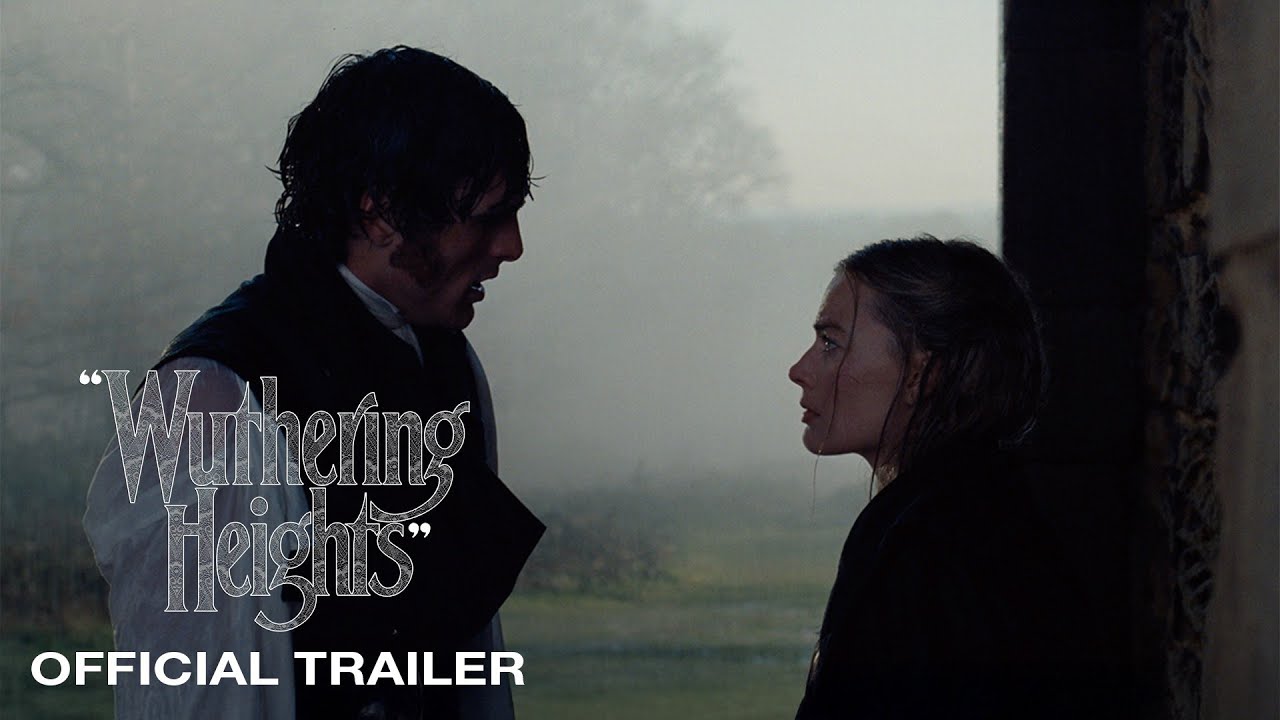
Indeed, Wuthering Heights stands in stark contrast to a number of other classic novels that have either never been adapted or have simply never received the full cinematic treatment.
Whether it’s because they’ve been deemed unfilmable, the recalcitrance of the original author (or their estate), or the simple whims and pitfalls of the Hollywood system, none of these acclaimed books has been acted out for a paying cinema audience.
In most cases, that’s a crying shame. In others, though, we can totally understand why they remain bound to the paper format.
Which of these unfilmed novels would you most like to see adapted? Let us know in the comments section below.

How Michael Chabon’s Pulitzer Prize-winning novel hasn’t been filmed in the past quarter-century is beyond us, though it’s been very close on several occasions. As a piece of historical fiction, it seems to be absolutely perfect for the cinematic treatment – or at least for a glossy limited series. The source material is a genre-straddling work of genius, covering the formation of a fictional New York comic book company during the Second World War by two Jewish cousins. It covers some pretty heady stuff – identity, fascism, the immigrant experience, and the American dream – all underpinned by a love of comics.

Despite a title that’s wildly misleading, Stoner is one of the most quietly devastating novels of the 20th century. First published in 1965, John Williams’ book follows William Stoner, a Missouri farm boy who drifts into academia after discovering a love for literature, only to find himself living a life defined by professional frustration, a strained marriage and fleeting moments of happiness.
There have been attempts. A film adaptation was reportedly in development during the 2010s with Casey Affleck attached to star, but like many passion projects, it never made it into production. For now, Stoner remains one of modern literature’s most beloved “almost adaptations.”

After several false starts, Warner Bros and Bradley Cooper were said to be adapting Dan Simmons’s four-volume-strong series of sci-fi novels. That was in in 2021. The reason it’s been so difficult to get off the ground is the sheer density of its world building. While the core story of seven strangers on a pilgrimage to a mysterious planet has a fairly straightforward ring to it, Simmons dives far deeper into each character’s backstory than you might imagine, moving between themes and genres with immense commitment. It makes Game of Thrones, Lord of the Rings and Dune look like Thundercats.

Film makers love Kazuo Ishiguro. The Remains of the Day and Never Let Me Go were critical hits, while A Pale View of Hills and An Artist of the Floating World both received Japanese treatments. Film versions of Ishiguro’s most recent novels, Klara and the Sun (by Taika Waititi) and The Buried Giant (from Guillermo del Toro) are confirmed to be in the works, while even the unloved When We Were Orphans was optioned back in 2018. That leaves just The Unconsoled, Ishiguro’s difficult fourth book. At 500 pages long, and with a largely impenetrable plot, it seems likely to remain on the shelf.

If there’s one book that has come to represent a certain type of angsty, alienated 20th century youth, it’s The Catcher in the Rye. Controversy has often surrounded the book due to its association with several high profile murders, but that’s not why it’s never been filmed. Author J. D. Salinger always refused a film adaptation, and his estate has honoured his wishes ever since. Quite how you’d film a story that essentially amounts to one long internal monologue from a snarky, cynical brat is a question we probably won’t see answered until the rights enter the public domain in 2046.

Gravity’s Rainbow is often mentioned when the topic of ‘unfilmable’ novels crops up, and with good reason. It’s 800 pages long, jam-packed with both scientific jargon and explicit content, is veritably spilling over with characters, and it sports a fractured plot that’s prone to hallucinogenic dream sequences. An attempt was made to produce a Gravity’s Rainbow film – by the BBC, of all things – in the ‘90s, but it didn’t achieve lift off. Even that great modern-day Pynchon interpreter, Paul Thomas Anderson, hasn’t taken a stab. Yet.

Terry Pratchett’s Mort feels tailor-made for cinema. The fourth Discworld novel follows an awkward teenager who accidentally becomes Death’s apprentice, a job that involves soul collecting, existential chaos and a cat that can talk to his skeletal boss. It’s one of Pratchett’s most accessible and beloved books, blending fantasy, satire and surprisingly heartfelt coming-of-age beats.
It very nearly made it to the big screen. Disney once planned a traditionally animated adaptation, with The Little Mermaid and Aladdin directors John Musker and Ron Clements attached. The project reportedly stalled after Disney balked at committing to the wider Discworld franchise, and executives were said to be unsure about centring a family film around Death as a main character. Musker and Clements instead pivoted to a little project called Moana, leaving Mort as one of fantasy’s great “what ifs.”

This one’s a questionable inclusion, given that a 10-part Apple TV+ miniseries is confirmed to be in production. But we’re frankly astounded it’s taken this long for William Gibson’s Neuromancer to make its way to our screens. This, after all, is a foundational text in the so-called cyberpunk genre, directly inspiring box office smash hits like The Matrix, predicting real technological trends, and fundamentally shaping the language we use. A film version has been mooted several times in the past, but the book’s dense plot, sense-assaulting virtual landscapes, and brain-scrambling vernacular have repeatedly prompted the use of the U-word.

The late, great Cormac McCarthy didn’t deal in easy-to-adapt novels. Of the four books of his that have made the transition (not counting The Sunset Limited, which was based on a McCarthy play), only two can be deemed any kind of a success. Even then, both The Road and No Country For Old Men are awkward customers in their own way. Blood Meridian, though, would represent a whole other level of difficulty. This brutal, bloodthirsty tale is unrelentingly bleak and has caused numerous screenwriters and producers to return to their laptops with their tails between their legs.

Purely from a logistical standpoint, at 1,100 pages and some 500,000 words long, David Foster Wallace’s sprawling 1996 novel is better suited to the miniseries treatment than even a Scorsese-length movie. And if we’re talking television here, we can’t imagine Apple TV+ or Netflix taking a punt on a novel with such an unconventional and non-linear structure. Wallace’s masterpiece is filled with endless footnotes and lacks anything so mundane as a discernible plot, with much of the ‘action’ (such as it is) taking place in the heads of its characters. Even if it were filmable, it might just be unwatchable.

It seems strange that one of the finest fantasy and sci-fi authors of all time, Ursula K. Le Guin, continues to be so unappreciated by movie and TV producers. Many consider 1969’s The Left Hand of Darkness to be her masterwork – a piece of sci-fi literature with a clear feminist perspective that proved way ahead of its time, depicting as it does a far-off world where the inhabitants subscribe to no fixed gender. The material has been optioned and explored for adaptation to both the film and TV formats, but nothing concrete has ever emerged.

It’s not difficult to discern why David Markson’s 1988 novel is yet to be adapted, despite widespread critical acclaim. This is an inherently experimental book about a woman, Kate, who believes herself to be the last human on Earth. Before you start envisioning a glossy dystopian blockbuster starring Amy Adams, you must consider the form that the book takes. We learn only of Kate’s inner world – and that via a series of fragmented first person statements. It’s potentially the one book in this feature where we couldn’t even imagine how it would play out on screen.

Skip the search — follow Shortlist on Google News to get our best lists, news, features and reviews at the top of your feeds!
